
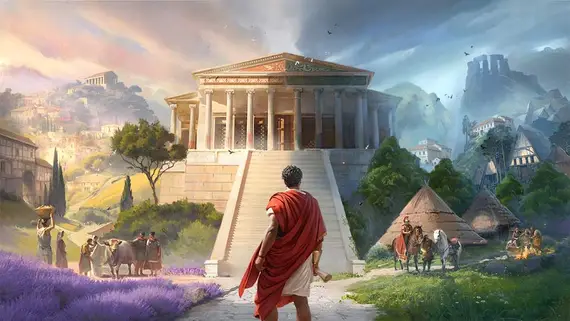
The Anno series has always been a favorite for players who love city-building, management, and strategy. Each entry in the series brings something new, while still keeping the balance between planning, trade, and politics. With Anno 117: Pax Romana, Ubisoft Mainz has taken the franchise into the world of the Roman Empire.
This review looks at the demo version of Anno 117: Pax Romana. The game is still a few months away from release, but the demo already shows us what kind of experience we can expect. It highlights Rome’s power, the challenges of ruling provinces, and the fun of managing both logistics and people.
A Step Into Roman Times
The year is 117 A.D., and the Roman Empire is at its peak. The emperor rules a vast territory, but the empire’s strength depends on its provinces. You, the player, step into the sandals of a governor tasked with guiding two important provinces: Latium and Albion.
- Latium is the heartland of Rome, but it is recovering from disaster. You must rebuild and restore stability.
- Albion is different. It is a recently conquered Celtic land, and your role is to integrate or balance its culture with Roman traditions.
This setup already gives the game flavor. You are not just building houses and farms. You are also making cultural and political decisions that affect your people’s future. The demo makes it clear that every choice has weight, whether you lean toward full Romanization or keep local traditions alive.
Gameplay Overview
At its core, Anno 117: Pax Romana is a city-building strategy game. The perspective is top-down, and the style will feel familiar to anyone who has played earlier Anno games. But this entry mixes the classic mechanics with the Roman setting, making it stand out.
Key Mechanics in the Demo
- City Planning & Construction
- Build roads, houses, workshops, and civic buildings.
- Placement matters: each building affects nearby ones positively or negatively.
- Production structures create resources but lower nearby happiness if placed too close to housing.
- Logistics & Roads
- Rome is famous for its roads, and here they play a central role.
- Warehouses act as hubs, collecting and distributing goods.
- The game allows diagonal building, breaking away from strict grids and letting players design more natural layouts.
- Citizenship System
- People move up social classes if their needs are met.
- Starting with Libertas, they can rise to Plebeians and beyond.
- Each class demands new goods (food, clothing, luxury).
- Cultural Choices
- In Albion, you can let Celts remain independent in identity or push them toward Roman culture.
- This decision affects technology paths, architecture, and overall city style.
- Resources & Environment
- Latium offers typical Roman lands.
- Albion brings unique challenges like marshes and hills. You must gather mud, reeds, and other Celtic resources to adapt.
Even in the demo, it’s clear the mechanics are polished. The systems feel deep but not overwhelming.
The Strength of Proximity and Trade
One standout feature is how buildings interact with each other. Unlike some city-builders where placement only affects looks, here it changes everything.
- Workshops near houses lower safety.
- Markets and bathhouses improve happiness.
- Farms need careful placement for maximum efficiency.
This creates a natural puzzle. You cannot just spam buildings in one place. Instead, you must balance quality of life, production, and logistics.
Roads and warehouses then tie it all together. Resources flow like blood through veins, and it’s satisfying to watch carts carry goods across your growing city.
Citizens and Society
A city is nothing without its people. The demo introduces the class system, which is the heart of progression.
- Basic citizens need food and shelter.
- Once satisfied, they upgrade to higher classes, unlocking advanced jobs.
- Higher classes demand luxuries but give access to stronger buildings.
This balance makes the game feel alive. Too many elites, and your economy collapses. Too many poor, and progress slows.
The system is not new to city-builders, but it feels rewarding here. Every time a household rises in rank, you see Rome’s glory reflected in your city.
Cultural Flavor – Rome vs. Celts
One of the most exciting features is the dual-province system. Playing Latium feels different from playing Albion.
- In Latium, you focus on rebuilding traditional Roman settlements.
- In Albion, you face cultural dilemmas: Do you Romanize the Celts, or let them keep their heritage?
Choosing Romanization brings Roman architecture, religion, and governance. Keeping Celtic traditions, however, changes the look, culture, and even technology of your province.
This system adds replay value. No two campaigns feel the same. The identity of your city depends on your decisions, not just on random events.
What the Demo Shows Well
The demo makes a strong case for the full release. Here are its highlights:
- Smooth mechanics – The logistics system feels polished and natural.
- Flexible building – Roads and diagonals give cities unique shapes.
- Atmosphere – From Roman villas to Celtic huts, the art captures the era beautifully.
- Cultural choice – Integration vs. independence creates meaningful variety.
- Performance – Unlike some recent strategy launches, the demo runs well with no major stutters.
Areas That Need Work
No demo is perfect, and Anno 117 still has some rough edges:
- Building ranges are short – You often build too many warehouses and fire stations just to cover basic needs.
- Research feels underdeveloped – The discovery tree is shallow in the demo, with most progress tied to citizenship.
- Religion is limited – Roman gods only give small bonuses. They feel like a background system rather than a central one.
- Citizen events are rare – They appear too infrequently and have little impact.
These issues don’t break the experience but show that the full release still has room to grow.
Visuals and Sound
The game looks stunning. Buildings are detailed, landscapes feel natural, and each environment has personality. Latium’s fields look warm and civilized, while Albion’s marshes feel wild and untamed.
The soundtrack leans on Roman themes without being overwhelming. Calm background music fits the pace of a strategy game. Small details—like citizens chatting or carts rolling—make the world feel alive.
Final Thoughts on the Demo
The Anno 117: Pax Romana demo gives us just a taste, but it is a rich one. In one hour of playtime, you can already feel the depth and polish. The systems work together smoothly, the art brings Rome and the Celts to life, and the choices feel meaningful.
This is not just another city-builder. It feels like a historical strategy with character, one that mixes logistics with culture, and economy with identity.
The only real downside of the demo is its time limit. Each session ends after an hour, erasing your progress. But even that speaks to its strength—it leaves you wanting more.
When Anno 117 fully releases in November 2025, it could easily become the gold standard of modern city-builders. If the demo is any sign, then truly, all roads lead to excellence.
Quick Facts
- Title: Anno 117: Pax Romana
- Demo Release: September 2, 2025
- Full Release: November 13, 2025
- Developer/Publisher: Ubisoft Mainz / Ubisoft
- Platforms: PC (Steam, Epic), PS5, Xbox Series X|S
- Genre: Strategy, City-Building, Simulation
- Players: 1–4 (Single & Multiplayer)